
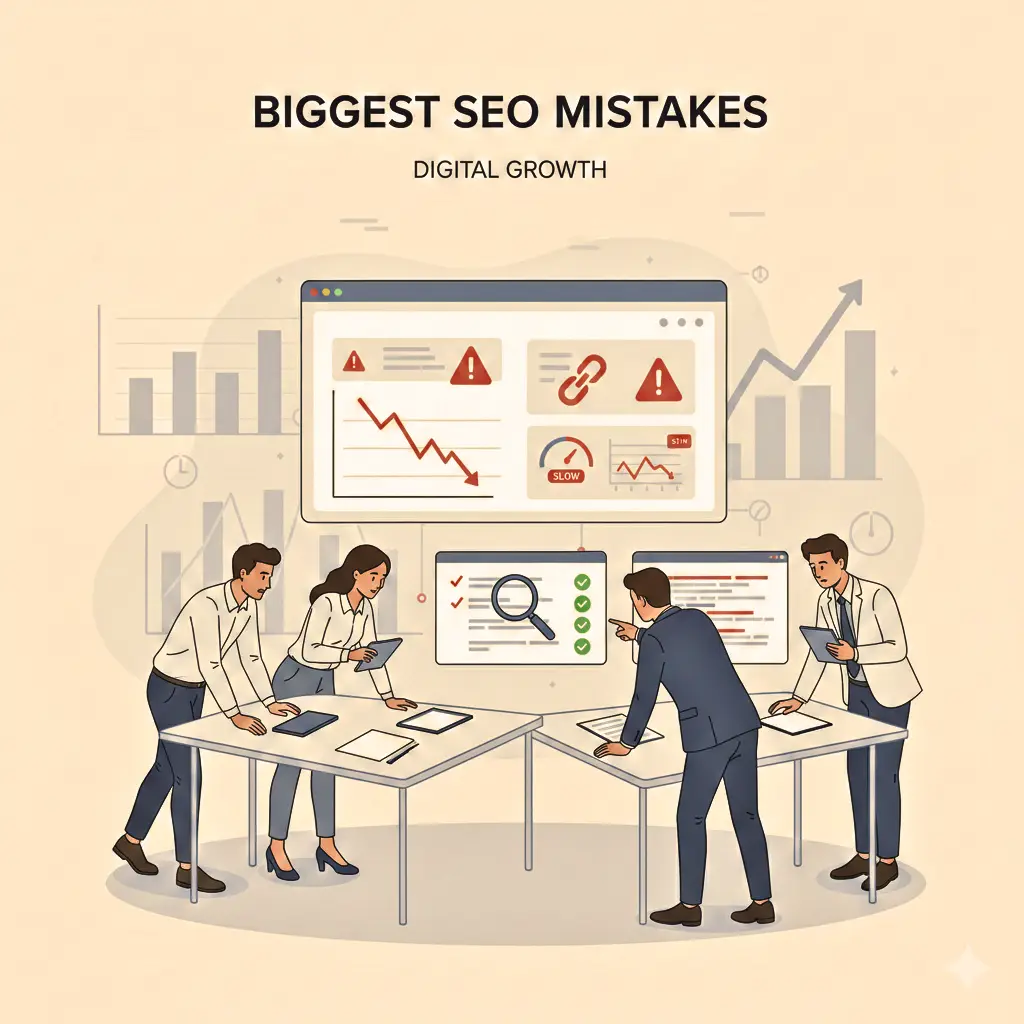
As companies expand their digital presence, SEO often becomes a critical growth driver. However, during rapid digital growth, many businesses unknowingly commit serious SEO mistakes that damage rankings, reduce traffic, and slow long-term success.
Growth without a structured SEO strategy can create more problems than opportunities. Understanding the most common SEO mistakes can help businesses avoid setbacks and build sustainable online visibility.
Ignoring Technical SEO Foundations
One of the most damaging SEO mistakes companies make is neglecting technical SEO.
As websites grow, they often accumulate:
- Broken links
- Duplicate pages
- Slow loading speeds
- Poor mobile optimization
Without strong technical foundations, search engines struggle to crawl and index pages effectively. This directly impacts rankings and visibility.
Digital growth should always include regular technical audits to ensure the website structure supports expansion.
Focusing on Quantity Over Quality Content
During expansion, companies often increase content production rapidly. While publishing frequently can help, prioritizing volume over value is a major SEO mistake.
Low-quality, repetitive, or AI-generated surface-level content can:
- Reduce credibility
- Increase bounce rates
- Lower overall rankings
Search engines now prioritize expertise, depth, and original insights. Content must solve real problems and provide meaningful value to users.
Targeting the Wrong Keywords
Many businesses chase high-volume keywords without considering search intent.
This SEO mistake results in:
- High traffic but low conversions
- Increased competition
- Poor ROI
During digital growth, keyword strategy should align with:
- Buyer intent
- Service offerings
- Business goals
Targeting decision-stage and transactional keywords often drives better long-term results than broad informational terms.
Neglecting On-Page Optimization
Another common SEO mistake is inconsistent on-page optimization.
This includes:
- Missing meta titles and descriptions
- Poor heading structure
- Weak internal linking
- Lack of schema markup
As websites expand, maintaining structured optimization becomes more complex. Without proper on-page consistency, search engines struggle to understand content hierarchy and relevance.
Weak Internal Linking Structure
During digital growth, companies add new pages but forget to connect them strategically.
Poor internal linking is a hidden SEO mistake that:
- Reduces page authority flow
- Weakens content relationships
- Limits indexing efficiency
A strong internal linking structure improves crawlability and strengthens topical authority.
Ignoring User Experience Signals
Search engines increasingly evaluate user behavior signals such as:
- Time on page
- Click-through rates
- Bounce rates
Companies focused only on rankings often ignore UX improvements. Slow design, cluttered layouts, and unclear navigation reduce engagement.
SEO and user experience must grow together. A technically optimized website that provides poor usability will struggle to maintain rankings.
Overlooking Mobile Optimization
With mobile traffic dominating search behavior, failing to optimize for mobile is a serious SEO mistake.
During digital growth, new landing pages and design updates must be tested across devices. Mobile-first indexing means search engines primarily evaluate the mobile version of a website.
Ignoring this can significantly reduce visibility.
Inconsistent Brand Messaging
As companies scale, multiple teams may handle content creation. Without clear guidelines, messaging becomes inconsistent.
This SEO mistake affects:
- Authority
- Trust
- Conversion rates
Search engines favor clear, consistent expertise signals. Unified brand positioning strengthens credibility and improves search performance.
Not Tracking SEO Performance Properly
Growth requires measurement. Many companies fail to monitor:
- Keyword performance
- Conversion metrics
- Traffic sources
- Technical health
Without clear tracking, SEO decisions become guesswork. Data-driven optimization ensures continuous improvement.
Treating SEO as a One-Time Task
Perhaps the biggest SEO mistake companies make is assuming SEO is a one-time setup.
Search algorithms evolve constantly. Competitors adapt. Market behavior shifts.
Digital growth demands ongoing optimization, audits, and strategic adjustments. Sustainable success comes from continuous improvement not temporary fixes.
Final Thoughts
Digital growth presents incredible opportunities, but it also increases complexity. The biggest SEO mistakes often occur when companies expand without a structured, long-term strategy.
By focusing on technical stability, content quality, keyword intent, and consistent optimization, businesses can turn SEO into a powerful growth engine rather than a growth obstacle.